Why Does My Hot Water Run Out So Quickly?
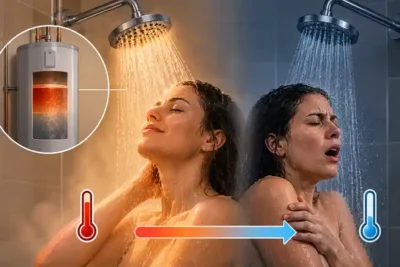 Few things are more frustrating than stepping into a hot shower only to have the water turn cold a few minutes later. If you experience hot water running out faster than it used to, the problem may be related to your water heater, household demand, sediment buildup, or a failing component. Some hot water problems are relatively simple to correct, while others may indicate that the water heater is approaching the end of its useful life. Understanding the possible causes can help you determine when it’s time to call a plumber.
Your Water Heater May Be Too Small
Traditional tank water heaters store a limited amount of heated water. Once that supply is depleted, the system needs time to heat more water. If several people shower within a short period, or you’re simultaneously running a dishwasher or washing machine, your household may simply be using hot water faster than the tank can replenish it. This can be especially noticeable when a home’s occupancy or hot water usage has increased since the water heater was originally installed.
If the water heater consistently can’t meet normal household demand, it may be worth discussing whether a larger tank or tankless water heater would be a better fit.
Sediment May Be Taking Up Space in the Tank
Minerals and other sediment can gradually accumulate at the bottom of a tank-style water heater. As sediment builds up, it can reduce the amount of usable space available for hot water. A water heater that appears to have a 50-gallon capacity, for example, may effectively hold less usable hot water when substantial sediment has accumulated inside the tank.
Sediment can also interfere with efficient heat transfer and may contribute to popping or rumbling sounds from the water heater. Regular water heater maintenance may help reduce sediment accumulation and maintain the system’s performance.
An Electric Heating Element May Be Failing
Many electric water heaters use two heating elements. If one stops working properly, the water heater may still produce hot water—but considerably less than normal. This can make the problem somewhat confusing. You haven’t completely lost hot water, but showers become shorter and the supply runs cold much sooner than it used to. A plumber can diagnose the water heater to determine whether a heating element, thermostat, electrical component, or another part of the system is responsible.
A Gas Water Heater May Not Be Heating Properly
Gas water heaters can also experience problems that reduce their ability to produce or maintain sufficient hot water. Problems involving the burner, thermostat, gas supply, or other components can affect water-heating performance. Because gas appliances require proper operation and ventilation, problems involving a gas water heater should be evaluated by a qualified professional.
If you’re noticing reduced hot water along with unusual sounds, odors, or other changes in water heater performance, schedule an inspection rather than ignoring the problem.
The Thermostat Could Be the Problem
If your water heater isn’t reaching the expected temperature, a thermostat problem could be responsible. The thermostat helps control when the water heater heats the water and to what temperature. A malfunction can result in inconsistent water temperatures or a supply that doesn’t stay hot for very long. Avoid simply turning the temperature setting significantly higher in an attempt to compensate. Excessively hot water can create a scalding hazard and may not address the underlying problem.
A Broken Dip Tube Can Affect Hot Water Supply
In a conventional tank water heater, the dip tube helps direct incoming cold water toward the bottom of the tank, where it can be heated. If the dip tube becomes damaged, cold incoming water may mix with the hot water near the top of the tank. This can cause the water leaving the heater to become lukewarm or cold much sooner than expected. Because the problem occurs inside the water heater, it isn’t always obvious without professional diagnosis.
Your Household May Be Using More Hot Water
Sometimes the water heater isn’t malfunctioning at all. Changes in household habits can dramatically increase hot water consumption. Additional family members, longer showers, a new soaking tub, more frequent laundry, or simultaneous appliance use can push an existing water heater beyond its capacity. Think about whether anything has changed since you first noticed the problem.
If your hot water demand has permanently increased, upgrading the water heater may make more sense than repeatedly trying to improve the performance of an undersized system.
Your Water Heater Could Be Getting Old
Water heaters don’t last forever. As components age and sediment accumulates, performance can decline. An older water heater that produces less hot water, requires increasingly frequent repairs, leaks, or shows other signs of deterioration may be approaching the point where replacement is more practical than another repair. Age alone doesn’t automatically mean a water heater needs replacement. Its condition, maintenance history, performance, and repair costs should all be considered.
A professional plumber can evaluate the system and help you determine whether repair or replacement makes more sense.
Could a Tankless Water Heater Solve the Problem?
For some households, a tankless water heater can be an alternative to increasing traditional storage capacity. Instead of maintaining a tank full of heated water, tankless systems heat water as it’s needed. When correctly sized for the household’s demand, this can provide a longer continuous supply of hot water. However, tankless doesn’t mean unlimited capacity under every circumstance. Every unit has a maximum flow rate, and simultaneous showers, faucets, and appliances can exceed what an undersized system can provide.
Before switching to tankless, a plumber should evaluate household hot water demand, plumbing, utilities, and installation requirements to determine the appropriate system.
When Should You Call a Plumber?
Running out of hot water once after several consecutive showers doesn’t necessarily indicate a problem. Consistently running out of hot water during normal household use deserves more attention. Consider having your water heater inspected if you notice:
- Hot water running out much faster than before
- Water never getting fully hot
- Inconsistent water temperatures
- Unusual popping or rumbling sounds
- Discolored hot water
- Water leaking around the heater
- Frequent water heater repairs
- A noticeable decline in performance
A professional inspection can determine whether the problem involves normal household demand, sediment, a failed component, or the condition of the water heater itself.
Water Heater Repair & Installation From Reliable Rooter & Plumbing Pro
If your hot water doesn’t last as long as it should, Reliable Rooter & Plumbing Pro can help determine why. Our plumbers diagnose water heater problems and provide professional water heater repair, replacement, and installation for homeowners throughout our service area.
Whether your water heater needs a repair or you’re considering a new tank or tankless system, we’ll evaluate the situation and help you determine an appropriate solution for your home.
Contact Reliable Rooter & Plumbing Pro today to schedule water heater service.